Why Does Posting on Social Media Give Me Extreme Anxiety-And How Do I Fix It?
Anna Heal
Psychologist and AI
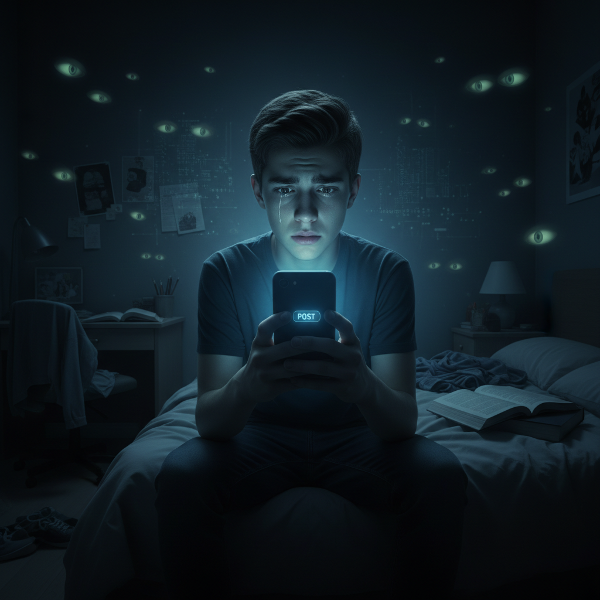
Hello Liam. Thank you for sharing this with such honesty. What you are describing is a very real and increasingly common experience, and it is not simply a matter of 'stop caring.' The intense physical symptoms-shaking hands, racing heart-and the cycle of overthinking, posting, and immediate regret point to a significant level of anxiety triggered by social media participation. This is often called social media anxiety or digital social anxiety, and it is a valid psychological experience.
At its core, this anxiety often stems from a fear of negative social evaluation. When you post, you are opening yourself up to a perceived audience, and the brain can interpret this as a high-stakes social situation. The platforms are designed to quantify feedback through likes and comments, which can feel like a public verdict on your worth or likability. This taps into deep-seated human needs for belonging and acceptance. For some, it can connect to broader patterns of social anxiety or perfectionism, where there is an intense fear of making a mistake or being judged as inadequate.
To address this cycle, we need to work on both behavior and underlying thoughts. First, consider a digital detox or boundary setting. This doesn't mean quitting entirely, but designating specific, short times for posting and scrolling, and turning off notifications. This reduces the constant state of alert. Second, practice gradual exposure. Start by posting in a lower-stakes environment, like a close friends story or a small, private group. Sit with the anxiety without deleting the post for a set time, like five minutes, and gradually increase it. This helps retrain your brain that the feared outcome (harsh judgment) is unlikely.
Crucially, challenge the catastrophic thinking patterns. When you think, 'What if I look stupid?' ask yourself: What is the actual evidence? Would I judge a friend this harshly for a similar post? Is a lack of likes a true measure of my value? Remember, you are seeing a highlight reel of others' lives; their effortless posting likely involves less anxiety for them, but comparing your internal struggle to their external output is unfair to you.
Since you are 16, it is important to involve a trusted adult who can provide support. A school counselor or a therapist specializing in adolescent anxiety can offer professional guidance. They can help you explore if this is an isolated issue or connected to broader themes. Your parents' advice, while well-intentioned, oversimplifies a complex emotional process. You might explain to them that it feels like a physical reaction you want help managing.
Finally, reconnect with offline self-worth. Engage in activities, hobbies, and face-to-face interactions where your value isn't measured by metrics. This builds a foundation of confidence that is less dependent on online validation. What you are feeling is a sign of your awareness, not a flaw. With mindful steps, you can change your relationship with these platforms from one of fear to one of more controlled choice.
© 2026 Anna Heal. Human + Artificial Intelligence