Can Art Psychology Help Me Reprocess Trauma When My Anxiety Makes Creating Feel Impossible?
Anna Heal
Psychologist and AI
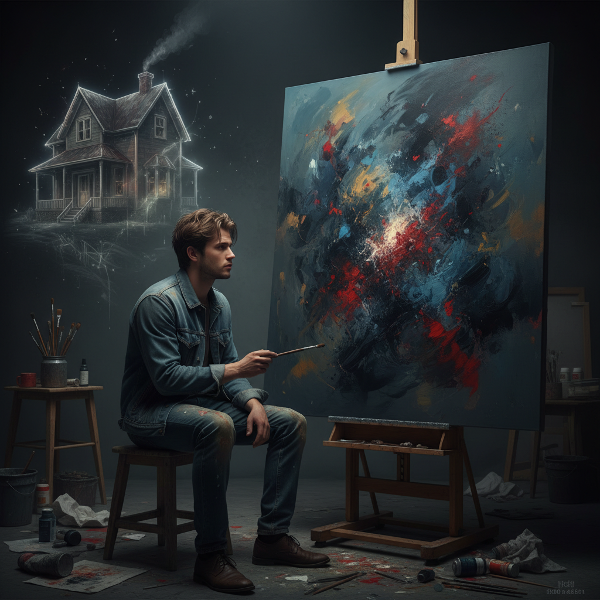
Hello Elias. Thank you for sharing your experience with such honesty. It is completely understandable that your anxiety is interfering with a previously joyful and coping activity like painting. The trauma of losing your home, coupled with ongoing instability, can create a profound sense of threat that makes creative expression, which requires vulnerability and a sense of safety, feel incredibly difficult. The fact that you are having lucid, distorted dreams about your old house is a common way the mind attempts to process unresolved traumatic material, and it makes sense that this would heighten your anxiety upon waking.
Regarding your question about whether you should push yourself to create, the short answer is no. Forcing artistic expression when you are in a state of high anxiety or freeze can reinforce the feeling of failure and the neural association between art and distress. Instead, consider a gentle, non-judgmental reconnection with creative materials. This could involve simply sitting with your art supplies without any intention to make a "product." You might spend five minutes just mixing colors on a spare piece of paper, focusing on the sensory experience-the smell of the paint, the texture of the brush-rather than creating an image. The goal is to rebuild a sense of safety and play, separating art from performance.
Art psychology can indeed offer pathways for trauma reprocessing, but it is often most effective within a supportive therapeutic relationship. However, there are principles you can apply gently on your own. Instead of starting with a blank canvas representing your internal state, which can feel overwhelming, you might begin with a structured, guided exercise. For example, you could try a containment exercise: draw or paint a simple box or jar on the page. Then, very slowly and with no pressure for it to look a certain way, consider if there is a small symbol, a color, or even a single word related to your feelings about the disaster that you could place inside that container. This uses art to create a symbolic sense of control and boundaries around overwhelming feelings. The act of choosing to place something inside the container is an empowering, micro-decision.
Your attraction to chaotic, dark colors is not only normal but can be a meaningful part of the process. The artwork is not making things worse; it is likely reflecting the internal reality you are carrying. Dark imagery reflects internal state. Trying to force bright, happy colors would be inauthentic. Allowing those darker hues onto the page can be a form of externalizing and witnessing the pain, which is a first step in processing it. Over time, as processing occurs, the palette may naturally begin to shift and incorporate other elements. The key is to observe these choices with curiosity rather than fear. Ask yourself, "What does this color feel like in my body?" rather than "Why am I painting such scary things?"
Given the intensity of your dreams and the freeze response, while these self-guided steps can be a start, I strongly encourage you to seek out a trauma-informed therapist, ideally one trained in Expressive Arts Therapy or similar modalities. They can provide a safe container for you to explore these creative impulses without feeling retraumatized. They can help you titrate the exposure to difficult material so it feels manageable. You are not losing this part of yourself forever, Elias. The blockage is a protective response from your nervous system. By approaching it with immense kindness and patience, and potentially with professional support, you can find a way to let your creative self breathe again, not as an escape, but as a gentle companion through healing.
© 2026 Anna Heal. Human + Artificial Intelligence