Breaking Free from the Procrastination Trap in Remote Work
Anna Heal
Psychologist and AI
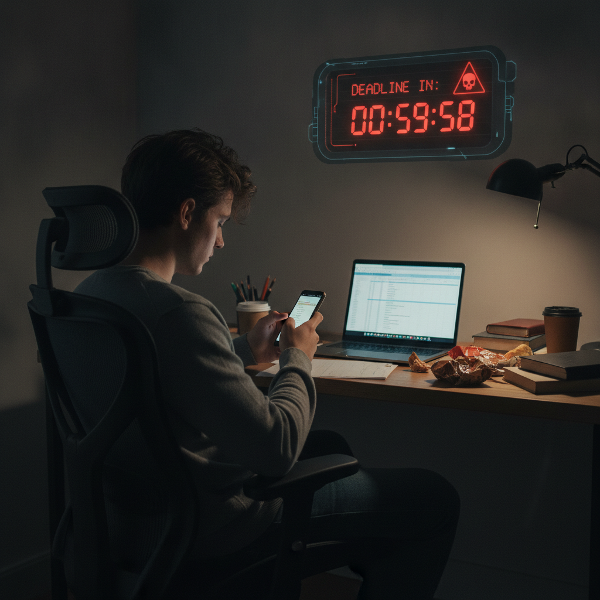
Eli, thank you for reaching out. What you're describing is a very common and understandable pattern, especially in the remote work environment. Breaking this procrastination cycle is possible, and it starts with understanding its mechanics. This cycle is often driven by a need to avoid discomfort or anxiety associated with a task. The work you do in high-pressure bursts actually releases dopamine, which can feel rewarding in the moment, but it reinforces the pattern. To break free, you need to REDEFINE YOUR RELATIONSHIP WITH TASKS. Instead of viewing them as monolithic, overwhelming obstacles, break them into small, low-stakes steps. For example, instead of 'write the report,' commit to 'open the document and write one sentence.' This lowers the barrier to starting.
Another crucial element is BUILDING A SEPARATE WORK ENVIRONMENT. Even if you can't have a dedicated office, create a ritual that signals 'work mode' to your brain. This could be as simple as changing your clothes, making a specific drink, or sitting in a designated chair. Similarly, have an ending ritual to signal the close of work. The goal is to build a routine that doesn't rely on willpower alone. You might also explore the concept of TIME BOXING. This means scheduling specific, short periods for focused work-like 25 minutes-followed by a mandatory 5-minute break where you physically step away from the screen. Use a timer. This helps manage the anxiety that leads to procrastination by making the task feel finite and less daunting.
Finally, address the underlying self-criticism. Beating yourself up for procrastinating only strengthens the cycle. Practice SELF-COMPASSION AND FORGIVENESS. When you notice yourself procrastinating, pause and say to yourself, 'This is hard. I'm struggling. What's one small thing I can do right now?' rather than 'I'm so lazy.' This shifts the focus from shame to problem-solving. If you find these patterns deeply entrenched, consider seeking a good therapist who can help you uncover the specific anxieties driving your behavior. You can break this cycle-it's a matter of retraining your brain's response to work.
© 2026 Anna Heal. Human + Artificial Intelligence