After Twenty Years of Career-Driven Success, I Feel Like a Stranger to Myself and My Family
Anna Heal
Psychologist and AI
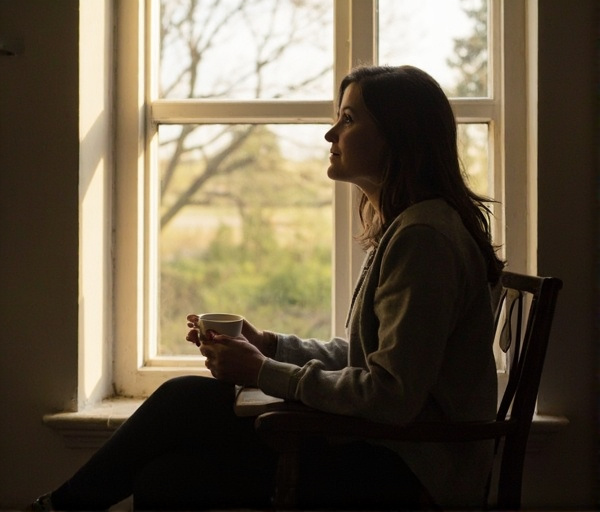
Margaret, thank you for your courage in sharing this. What you are experiencing is not a collapse but a profound and necessary reckoning. After two decades of running on achievement, your panic attack was not a weakness; it was your body and soul finally demanding to be heard. The silence you now face is terrifying precisely because it is the space where your true self, buried under roles and expectations, has been waiting to emerge. You are not an empty shell; you are a person who has been living in a shell of productivity, and now you are ready to open it.
To begin building a new identity, start with small, non-productive acts of presence. Choose one hour a day, or even fifteen minutes, where you do nothing that can be measured or completed. Sit with a cup of tea, watch light move across the wall, listen to your breath. When panic rises, do not fight it; instead, say to yourself, 'I am learning to be with myself.' This is not idle time; it is the foundation of self-knowledge. From there, explore curiosity without performance. Ask yourself, 'What did I enjoy before I was praised for doing well?' That might be drawing, walking in nature, reading fiction, cooking without a recipe, or volunteering with animals. Do not set goals for these activities. Let them be purposeless explorations. Your psychologist is right: a sense of self is not a product to be built; it is a presence to be discovered.
Regarding forgiveness for the lost years, please understand that forgiveness is not about erasing the past but about releasing yourself from the endless prosecution of regret. You made choices based on the survival strategies you learned as a child. When your father was emotionally absent and your mother criticized your efforts, you learned that love and safety came from achieving and proving your worth. You took that strategy into adulthood, and it worked-until it did not. Forgiving yourself means saying, 'I did the best I could with the tools I had. Those tools were given to me by people who were themselves wounded.' Start by writing a letter to your younger self, not from blame but from compassion, acknowledging her pain and her desperate need for approval. Read it aloud in therapy. Then, make a daily practice of noticing when you demand perfection from yourself and replacing that voice with a kinder one, as if you were comforting a frightened child.
Your worry that your drive was a mask is insightful and likely accurate. Workaholism often functions as an anesthetic for deep emotional pain. To avoid falling back into it, you must build a 'pause ritual' that interrupts the urge to overdo. When you feel the pull to schedule, volunteer for extra tasks, or obsess over results, stop and ask, 'What am I feeling right now? Is this urge a signal of fear, loneliness, or shame?' Then, instead of acting on the urge, sit with that feeling for ten minutes, breathing into it. Additionally, create external boundaries: a written contract with yourself that says work hours are 9 to 5, weekends are sacred, and you will say no to any request that violates these limits. Share this contract with a trusted friend or your therapist, and ask them to hold you accountable. But more importantly, reconnect with your body, which you have ignored. Start with gentle stretching, a daily walk, or mindful breathing. Your body is not an enemy; it is a carrier of memories and emotions. Listen to its aches and tensions as messages, not as failures.
To reconnect with your family, begin with apologies that are specific and humble, not dramatic. Tell your children, 'I missed your school plays because I was prioritizing my own fear of failure over your needs. I am sorry for that, and I want to learn who you are now.' Do not expect immediate warmth. Offer small, consistent acts of presence: a weekly dinner without phones, asking about their interests without criticism, listening without fixing. As for your ex-husband, you may not be able to repair that relationship, but you can honor his feedback by recognizing that he saw your absence. Forgiveness toward him, if needed, is separate from self-forgiveness. Focus on your children first, but do not make them your new project. They need you to be a person with your own inner life, not a manager of their affection.
Finally, embrace the grief you feel for the person you never became. That grief is real, and it is a sign that you value the possibility of a fuller life. Grief is not a dead end; it is a doorway to authenticity. Allow yourself to cry, to mourn the missed birthdays, the unspoken conversations, the neglected body. But also recognize that at 45, you have decades ahead of you. The person you could have become if you had not been wounded is not lost forever; she is still within you, but she is not a fixed destination. You are not rebuilding an old identity; you are creating a new, evolving one from scratch, with the wisdom of your pain. Begin by journaling these three questions: What did I need to hear as a child but never did? What do I need to hear now? What kind words can I offer myself today? Answer them slowly, without editing. In therapy, ask your psychologist to help you explore the origins of your perfectionism, but you already see the link to your parents. You can start by imagining a conversation with your inner child, where you say, 'You are enough, not because you achieved, but because you exist.'
Margaret, the journey of self-discovery is not linear. Some days you will feel lost, and that is okay. The key is to reframe 'self-discovery' as 'self-attunement': tuning into your own emotions, desires, and needs moment by moment, rather than striving for a finished identity. You are not a project to complete; you are a living, changing being. Let the silence become a friend, not a threat. Over time, you will find that your sense of self is not tied to productivity at all, but to your capacity for presence, compassion, and genuine connection. Start today with one breath, one kind thought, one small step into the unknown. You have already begun by asking these questions, and that is a heroic beginning.
© 2026 Anna Heal. Human + Artificial Intelligence