Psychologist Anna Heal

🧠 Human + Artificial Intelligence = Best Solution

The Cognitive Bias Compass: Navigating Your Mind's Hidden Shortcuts

Our thinking isn't always rational. This test helps you understand how you perceive and analyze information, what intellectual strategies you use (analytical, creative, practical). Special attention is given to cognitive biases-systematic thinking errors we all make (e.g., 'black-and-white thinking,' 'catastrophizing,' 'mind-reading'). You'll also assess your tendency toward reflection versus impulsive decisions. Understanding your cognitive patterns helps you become more objective, improve decision quality, and reduce emotional influence on logic. This is especially useful in situations requiring balanced analysis and planning.
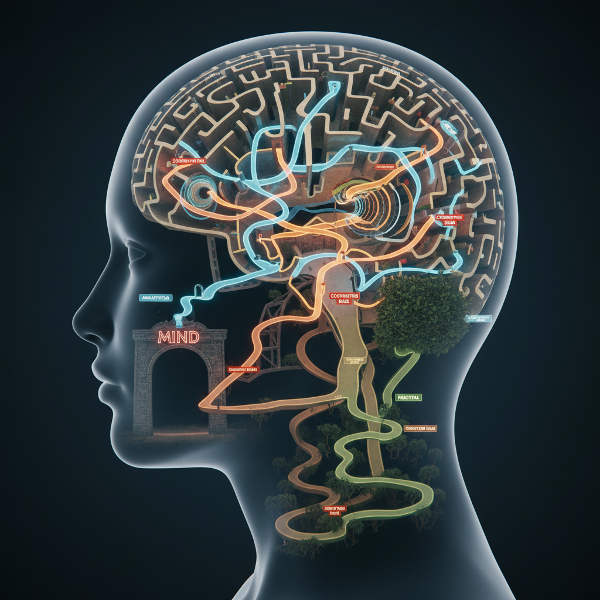
A visual metaphor of the mind as a maze, with paths representing different thinking strategies and distortions representing cognitive biases.
⚠️ Please answer all questions before getting the result

1: When you hear a surprising statistic, your first instinct is to:

2: If a project at work fails, you are most likely to think:

3: When making a significant purchase, you usually:

4: Someone criticizes your idea in a meeting. You internally:

5: Facing a complex problem, your preferred approach is:

6: When you succeed at a task, you tend to attribute it to:

7: You read a news story about a rare but dramatic event. You then feel:

8: In a debate, if your opponent makes a compelling point, you:

9: Planning a vacation, you primarily focus on:

10: You miss a deadline. Your immediate thought is:

11: When meeting new people, you often find yourself:

12: A friend is late. While waiting, you are most likely to:

13: Evaluating a risk, you give the most weight to:

14: After making a decision, you frequently:

15: Learning a new skill, you get frustrated. You think:

Ваш результат

Didn't find an answer to your question?
Chat with Anna anonymously and free for the first conversation
💬 Ask a Question in Telegram