Stuck in a Career Rut at 53: Is This Burnout or a Deeper Crisis?
Anna Heal
Psychologist and AI
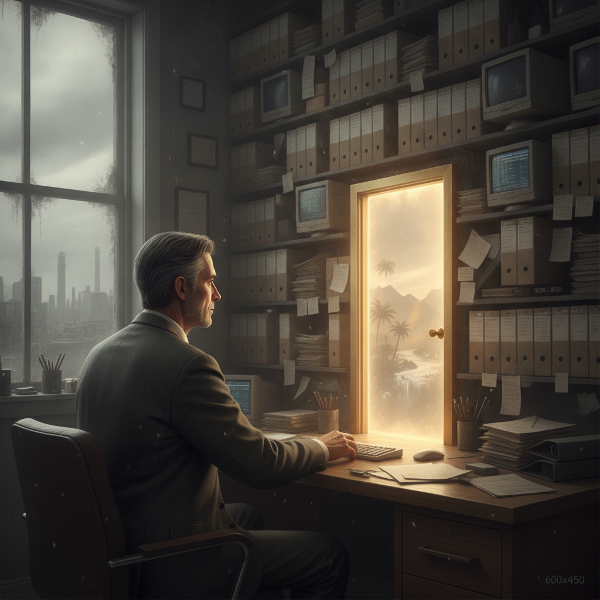
Frank, thank you for your honesty. What you are describing sounds less like a simple 'forty-year crisis' and more like a profound, legitimate psychological turning point. At 53, after two decades in a mid-level role, feeling suffocated and exhausted by routine is not a sign of weakness or a wasted life. It is often a signal that your inner needs have evolved beyond what your current environment provides. The label 'burnout' fits the exhaustion and cynicism, but your deeper questioning about wasted years points to something more existential: a reevaluation of meaning and purpose.
Let me first address the term PTSD. Post-traumatic stress disorder arises from specific, overwhelming events, not from chronic, diffuse workplace pressure. While years of workplace stress can certainly lead to anxiety, depression, and burnout, it is not clinically accurate to equate them with PTSD. That said, chronic stress can leave lasting emotional scars, such as hypervigilance, emotional numbness, or a sense of detachment, which can mimic some PTSD symptoms. If you have experienced specific traumatic incidents at work-like bullying, a major public failure, or harassment-then a separate evaluation by a licensed mental health professional would be wise. But your description points more to a midlife transition, sometimes called a 'midlife reevaluation' rather than a crisis.
At your age, many people face what psychologist Carl Jung called the 'second half of life' challenge: moving from ambition and external achievement toward meaning, authenticity, and legacy. Your performance reviews are good, which tells me you are competent, but your internal reward system is no longer being activated. This is a classic sign of value mismatch-what you do well is not what you care about. You may have spent 25 years adapting to organizational expectations, suppressing your own interests or creative impulses. Now that the external rewards (salary, status, security) no longer feel sufficient, the void becomes unignorable.
Rather than diagnosing yourself, I recommend viewing this as an invitation to redesign your relationship with work. One option is to seek a 'career pivot within your organization'-perhaps a lateral move to a different department, a mentorship role, or a project with social impact. Another is to explore part-time consulting or teaching on the side, which can reintroduce novelty and a sense of contribution without abandoning your career entirely. You might also consider a 'psychological sabbatical'-not necessarily a leave of absence, but a deliberate reduction of your cognitive load: delegate more, set firmer boundaries, and reclaim time for non-work identities like hobbies, relationships, or volunteering.
The exhaustion you feel with small decisions is a core symptom of decision fatigue and depleted emotional reserves. This suggests that your energy is being drained by low-control, high-demand tasks, not by the work itself. You may be over-functioning in areas that are no longer developmental for you. It is crucial to ask yourself: What part of your current role, even small, gives you a spark-even a flicker? Often, the seed of a new direction lies in the tasks you would do even if unpaid.
Finally, I want to normalize this experience. Feeling stuck at 53 is not a sign of failure; it is a sign of growth. Many people in their 50s undergo a profound 'inner reboot' that, if navigated with self-compassion, leads to greater fulfillment than any promotion could. Consider speaking with a therapist who specializes in midlife transitions-not to treat PTSD, but to help you clarify your values, grieve the lost years (if needed), and design the next chapter. You are not broken; you are awakening to a new phase of life. The wall you hit is not a dead end, but a door waiting to be opened.
© 2026 Anna Heal. Human + Artificial Intelligence