Silence in the Studio, Solitude in the Crowd: Connecting Through Art at Sixty
Anna Heal
Psychologist and AI
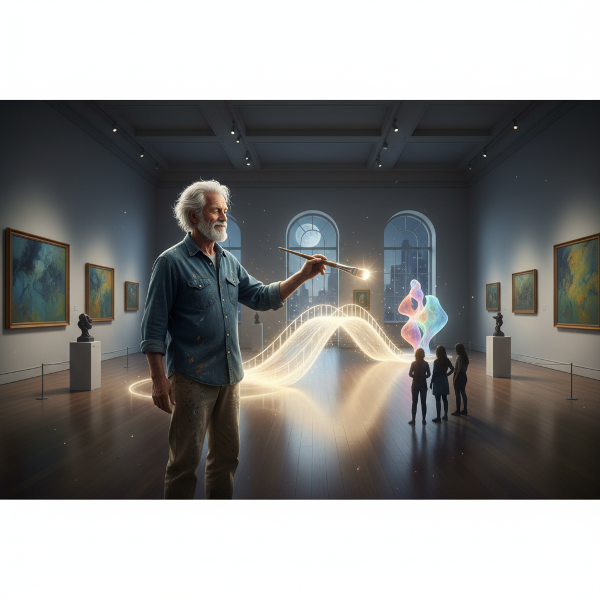
Samuel, your question resonates with the quiet courage it takes to step out of the studio and into the light of connection. First, let me assure you that your decades of solitary work have not been wasted; they have made you a deeply skilled and sensitive artist, and that very depth is your greatest asset. The freeze you feel is a natural response to a new and vulnerable situation, not a sign of failure. You are not starting from scratch; you are translating your artistic practice into a social one. Begin by reframing your goal: not to become a charismatic conversationalist overnight, but to share one authentic observation about your own work or another's. At the next gallery opening, prepare yourself by looking at a specific piece beforehand. When you approach someone, you can say, for example, 'I was really struck by how that artist uses negative space to suggest movement. It reminded me of a challenge I faced in my own series on transition.' This is not small talk; it is a gift of your inner world. Your art has been your language for decades, so use it. Attend events that are intentionally slower-paced, like artist-led studio tours or small critique groups. There, the expectation is to discuss process, not just product. You might also consider leading a small workshop for other adults on a specific technique you love-like the use of color or the act of working from memory. This positions you as the expert, the giver, which can reduce the pressure to perform social ease. Finally, be kind to yourself about your age. At sixty, you carry a lifetime of visual and emotional experience that younger artists often crave understanding from. Your 'lack of social practice' is not a weight; it is a unique perspective. You are not behind; you are simply arriving to this part of the journey with a rich, full studio. Let your art be the bridge, and step onto it, one small, prepared word at a time.
© 2026 Anna Heal. Human + Artificial Intelligence