How Can I Rebuild Communication Skills and Overcome Isolation at Sixty Three
Anna Heal
Psychologist and AI
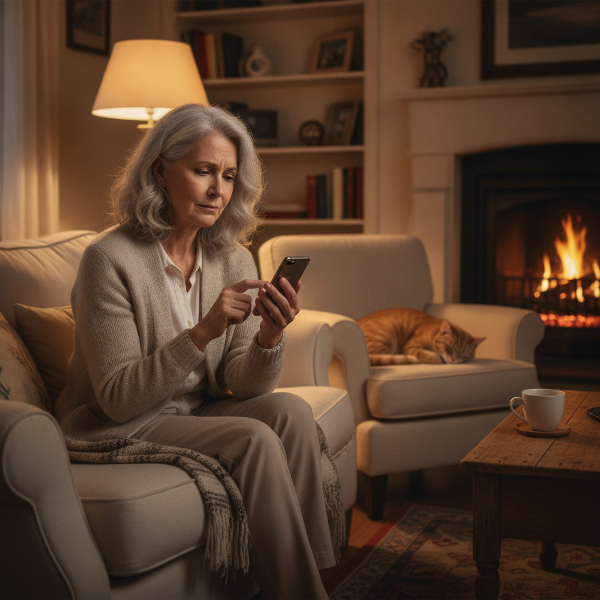
Dear Margaret, thank you for your courage in sharing your story. First, let me reassure you: there is nothing mentally wrong with you. What you are describing is a natural, human response to profound loss and long-term caregiving, followed by three years of isolation. The heaviness in your chest and trembling hands are classic signs of anxiety, not psychosomatic illness. Anxiety is a physical response to perceived threat, and when you think about calling a friend, your body is reacting to the fear of rejection, judgment, or simply not knowing what to say. This is not a sign of weakness; it is a sign that your nervous system has become sensitized from years of putting others first and then losing your primary emotional anchor. The good news is that communication skills are like muscles, and they can be rebuilt with gentle, consistent practice.
Let me suggest a step-by-step approach, starting with the smallest possible actions. Begin by redefining what communication means. It does not have to be long, witty conversations. It can be a single sentence exchanged with a cashier, a smile at a neighbor, or a brief comment about the weather. These micro-interactions build your confidence without overwhelming you. For the Sunday calls with your children, try a small change: instead of waiting for them to ask questions, prepare one or two simple things to share beforehand, like something you saw on a walk or a memory of your late husband that made you smile. You can even say, “I feel a little rusty at talking, but I wanted to tell you this.” Honesty can soften the stiffness. Over time, those calls will feel less like a test and more like a bridge.
Regarding the book club and hospital volunteering, I want you to consider a gradual exposure plan. You do not have to be the life of the group right away. For the book club, try arriving ten minutes early and sitting next to the facilitator. Ask one simple question about the book, such as “What part did you find most surprising?” Then practice listening and nodding. You do not need to lead the conversation; you just need to participate in small doses. If you leave after fifteen minutes, that is a success. For the hospital, instead of walking into the break room, ask if you could volunteer in a role that involves minimal chit-chat, like organizing supplies or comforting patients in one-on-one settings. This allows you to use your skills without the pressure of group dynamics. When you do face younger nurses, remember that your experience is a gift, not a burden. You have decades of wisdom that they may secretly admire. You can say, “I used to work here years ago, so I’m relearning the ropes.” That breaks the ice and invites them to help you, which makes you feel needed rather than obsolete.
Now, let us address the loneliness itself. Loneliness is a signal, not a sentence. It is your mind telling you that you need connection, but the fear of connection is keeping you stuck. To break this cycle, I recommend creating a “connection ladder” with ten rungs. Rung one: talk to your cat out loud with a full, expressive sentence. Rung two: say “good morning” to your reflection in the mirror. Rung three: call a local bakery and ask a question about their bread, even if you know the answer. Rung four: write a thank-you note to a former colleague, just one sentence. Rung five: join an online forum for widows, where you can type responses without seeing faces. Rung six: video call a friend with the camera off for the first five minutes, then turn it on for a minute. Rung seven: attend book club and say one sentence out loud. Rung eight: volunteer at the hospital for one hour in a quiet task. Rung nine: meet one person from the club for coffee for fifteen minutes. Rung ten: initiate a conversation with a stranger, like asking for directions. Move up a rung only when you feel ready, and if you slip, that is okay. Go back a rung and try again. This is not about perfection; it is about rebuilding trust in yourself.
About the psychosomatic question: while loneliness can worsen physical symptoms, it is not an illness itself. However, prolonged isolation can lead to depression or anxiety disorders, which are treatable. Since you are seeing a psychologist, we can work on cognitive-behavioral strategies to reframe your fears. For example, ask yourself: “What is the worst that could happen if I speak to a younger nurse?” The worst is likely an awkward pause, which is survivable. Then ask: “What is the best that could happen?” You might make a connection that brightens your day. Your age is an asset, not a liability. You have survived grief, caregiving, and a career. That strength is still in you. The trembling hands are just your body’s way of saying “I care about this.” Instead of fighting the anxiety, acknowledge it: “I feel nervous, and that is okay. I can take a slow breath and try one small step.”
Finally, please consider a weekly ritual of self-kindness. Every day, write down one thing you did that required courage, no matter how tiny. Then reward yourself with a favorite movie or a cup of tea. Also, explore new ways to meet people that match your quiet nature, such as a gardening club, a knitting circle, or a walking group for seniors. You do not have to be a talker to belong. Silence can be comfortable with another person. Sometimes just sitting side by side, watching birds, is a form of connection. And if you still feel stuck, consider a structured support group for grievers, where everyone understands the weight you carry. They will not judge you for being quiet; they will appreciate your presence.
Margaret, you have given so much to others. Now it is time to give to yourself. Start with one breath, one word, one minute of connection. You are not too old to learn, and you are not alone in this feeling. Rebuilding communication is a gentle, tedious process, but every small step is a victory. I believe in your capacity to do this. You are not broken; you are simply in transition. And as you move through it, you will find that your voice, while softer, still carries immense value. Take heart, and take that first rung today.
© 2026 Anna Heal. Human + Artificial Intelligence